
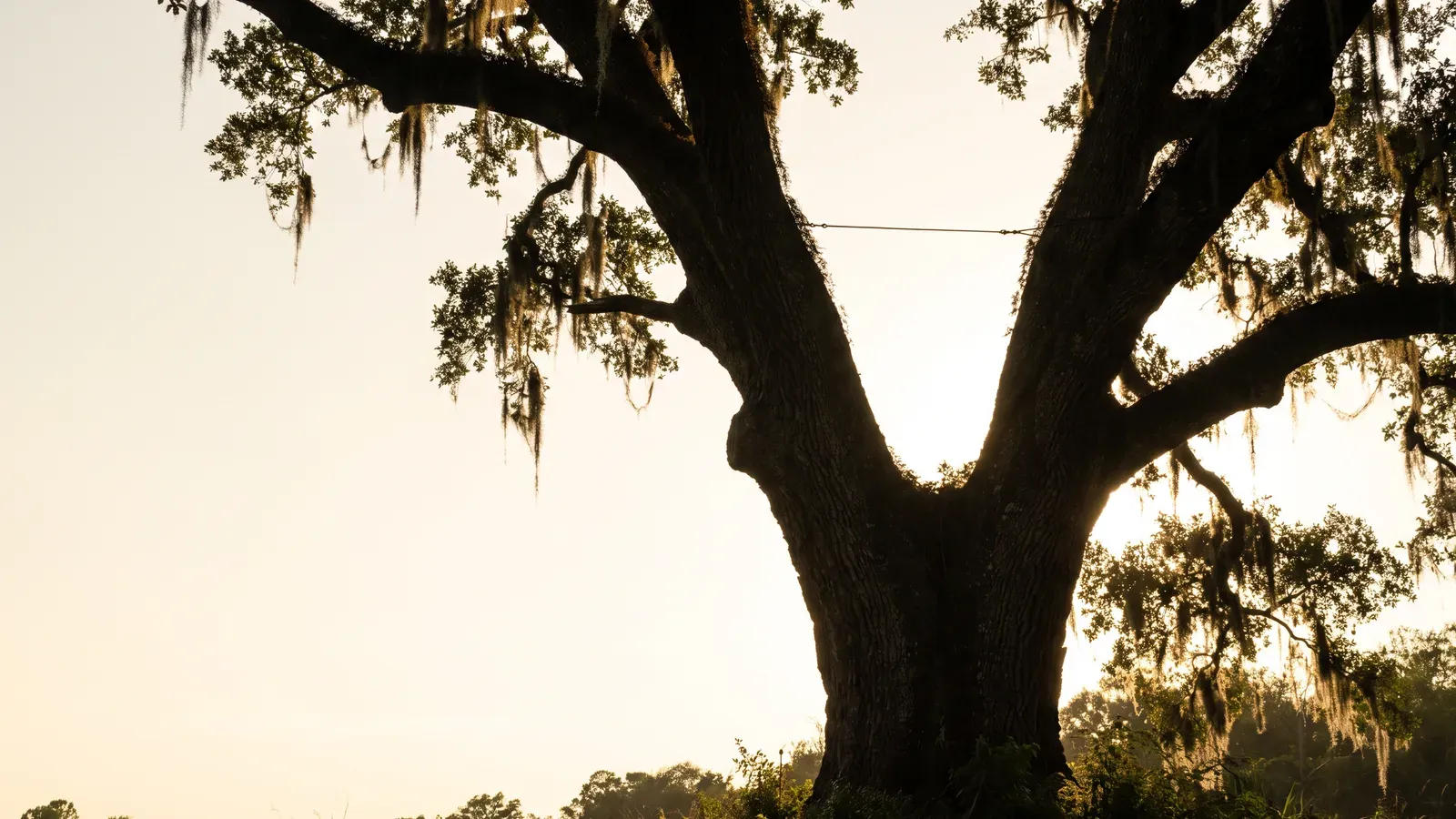
Structural support
Tree Cabling and Bracing in Lafayette and Across Acadiana
Louisiana Tree Masters installs cabling and bracing to support weak forks and heavy limbs in mature trees across Lafayette and Acadiana, when a licensed arborist finds a tree worth keeping. Support reduces the risk of a split; it does not rescue a tree that is already failing. Every estimate is free.

Credential recordLICENSE #26-0706
Field recordSINCE 1994
Support systems are prescribed, not sold. The assessment comes first.
How a support job runs
The tree decides whether it gets a cable.
Cabling is a prescription, not an add-on. These are the steps from the first look to the hardware in the crown.
- 01
A licensed arborist reads the structure
Where the stems meet, whether bark is pinched into the fork, any cracks or decay, and what sits under the tree, all assessed under License #26-0706.
- 02
Decide if support is the right answer
Sometimes pruning to take weight off is enough. Sometimes the tree is too far gone and removal is the honest answer. Cabling is for the trees in between.
- 03
Install the hardware in the crown
Steel cable is set in the upper crown, roughly two thirds of the way from the fork to the branch tips. Where a fork is already cracked, rigid rods can brace it lower down.
- 04
Check it over the years
A support system is not set and forget. Plan on a yearly look from the ground and a closer inspection from up in the tree about every three years.
Operations index
What cabling and bracing covers
Live oaks, pecans, and other big shade trees in Acadiana often grow two or more heavy stems from one fork. That is where support earns its keep.
-
Weak forks and codominant stems
Two stems of similar size growing from one point, often with bark pinched in the V between them, is a classic place for a tree to split.
-
Heavy limbs over roofs and driveways
Long, low live oak limbs can be supported rather than cut off, keeping the shade and the shape.
-
Bracing a cracked fork
Rods through a split or cracked union, combined with cables above, can hold a valuable tree together when the assessment says it is worth trying.
-
Weight reduction with support
Pruning to lighten the load and a cable to share it often work best together.
-
Inspecting existing cables
Cables put in years ago, by anyone, checked for wear, slack, and whether the tree has outgrown them.
Field assessment
Show us the fork that worries you.
Describe the tree, where it splits, and what sits under it. A licensed arborist reviews every request before the estimate.
Support answers
Frequently asked questions about cabling and bracing
01 What is tree cabling and bracing?
Cabling is a flexible steel cable installed high in a tree between stems or limbs, so they share load instead of pulling apart. Bracing uses rigid rods through a weak or cracked fork lower down. Both reduce the risk of a split in a tree that is otherwise worth keeping.
02 Will cabling save a tree that is already splitting?
Sometimes, but not always. A support system lowers risk; it does not make an unsound tree safe. If the crack is deep or the wood is decayed, a licensed arborist will tell you that removal is the safer answer.
03 Can you cable a live oak?
Yes. A live oak's heavy, spreading limbs and wide forks carry a lot of weight, which makes it a classic candidate for support. Cabling can let you keep a limb that would otherwise have to come off.
04 Does a cabled tree need follow-up?
Yes. The tree keeps growing and the hardware ages. Extension guidance calls for a ground inspection every year and a climbing inspection by an arborist about every three years.
05 Is the estimate free?
Yes. Estimates are free and carry no obligation, including the assessment of whether support is the right answer at all.
Keep the tree
Support the tree before the storm tests it.
If a big fork or a heavy limb has you worried, a licensed arborist can tell you whether cabling, pruning, or removal is the right call. Free estimates for Lafayette and Acadiana.

